
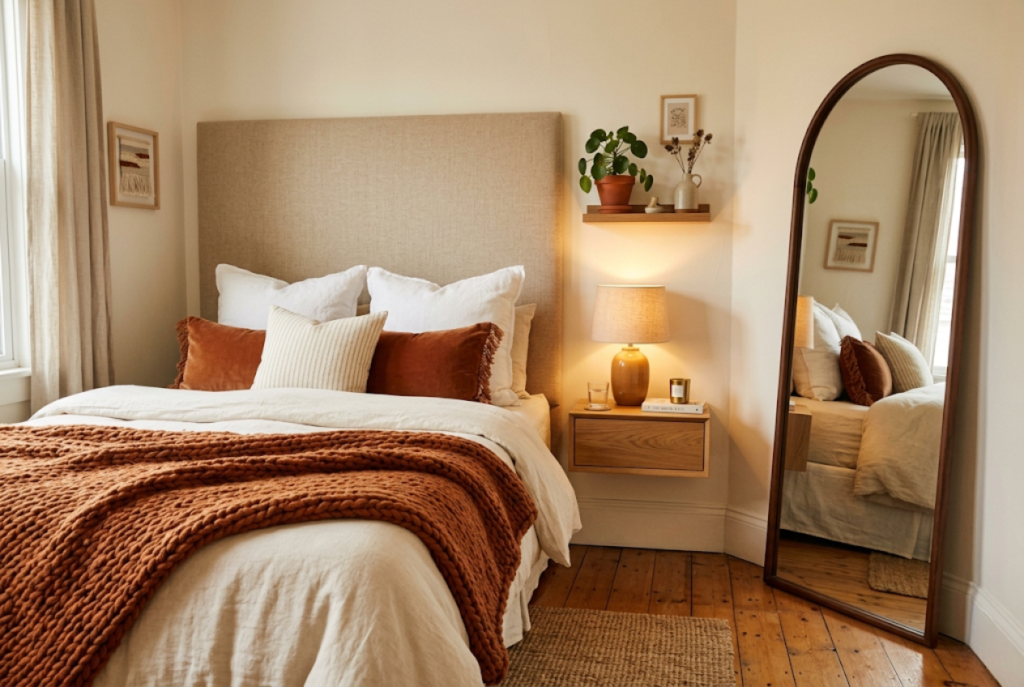
Small bedrooms are one of the most common design challenges — and one of the most Googled. Whether you’re dealing with a studio apartment bedroom nook, a box room in a family home, or just a room that feels crowded no matter what you do, the solution almost always lies in a handful of clever, strategic choices.
Here are 20 small bedroom decorating ideas that designers use to make compact spaces feel both larger and more luxuriously cozy at the same time.
Layout and Furniture
1. Put the Bed Against the Wall
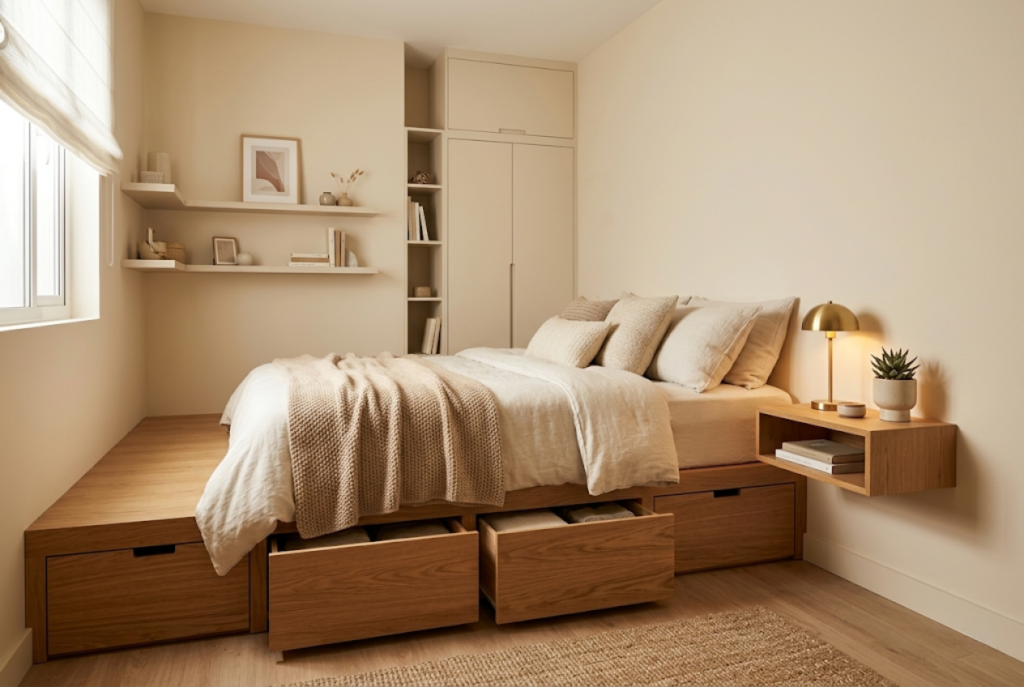
In a small room, a bed placed in the center eats up floor space on three sides. Pushing it against the wall — or ideally into a corner — frees up the rest of the room for movement and makes the space feel more intentional. Use a daybed frame or add decorative cushions to make the corner placement look styled, not crammed.
2. Choose a Bed With Built-In Storage
A bed with drawers underneath is one of the single highest-impact upgrades for a small bedroom. It eliminates the need for a dresser — which typically consumes 8–12 square feet of floor space — and keeps everything hidden and tidy. Ottoman beds and platform beds with drawer bases are the most effective options.
3. Use a Floating Nightstand Instead of a Floor One
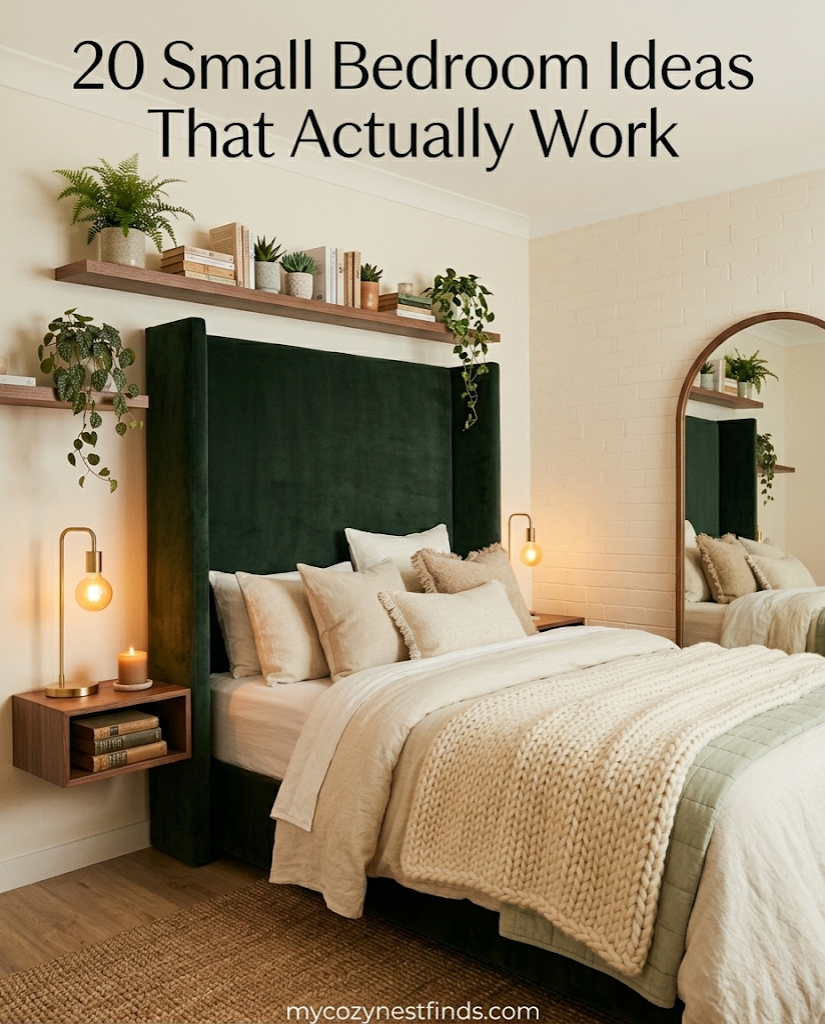
Wall-mounted floating nightstands free up floor space and make the room feel airier. They’re also endlessly more flexible — you can position them at exactly the right height, and they work in tiny spaces where even a small bedside table would create clutter.
4. Ditch the Dresser — Organize Your Closet Instead
If your room has a built-in closet, invest in interior organization systems rather than freestanding dressers. Well-organized closet interiors can eliminate the need for any other storage furniture in the room, instantly freeing up significant floor space.
Visual Tricks That Make Rooms Feel Larger
5. Paint the Ceiling a Shade Lighter Than the Walls
The oldest trick in the book works because it mimics the way natural light falls in open spaces — brighter sky above, darker ground below. This optical illusion makes ceilings feel higher without changing a single dimension of the room.
6. Use One Continuous Color Throughout
Contrary to intuition, painting walls, trim, and ceiling in the same color — or very close tones — makes small rooms feel larger, not smaller. Multiple colors create visual boundaries that the eye reads as edges and limits. One enveloping color removes those interruptions and the room expands.
7. Hang Curtains at Ceiling Height
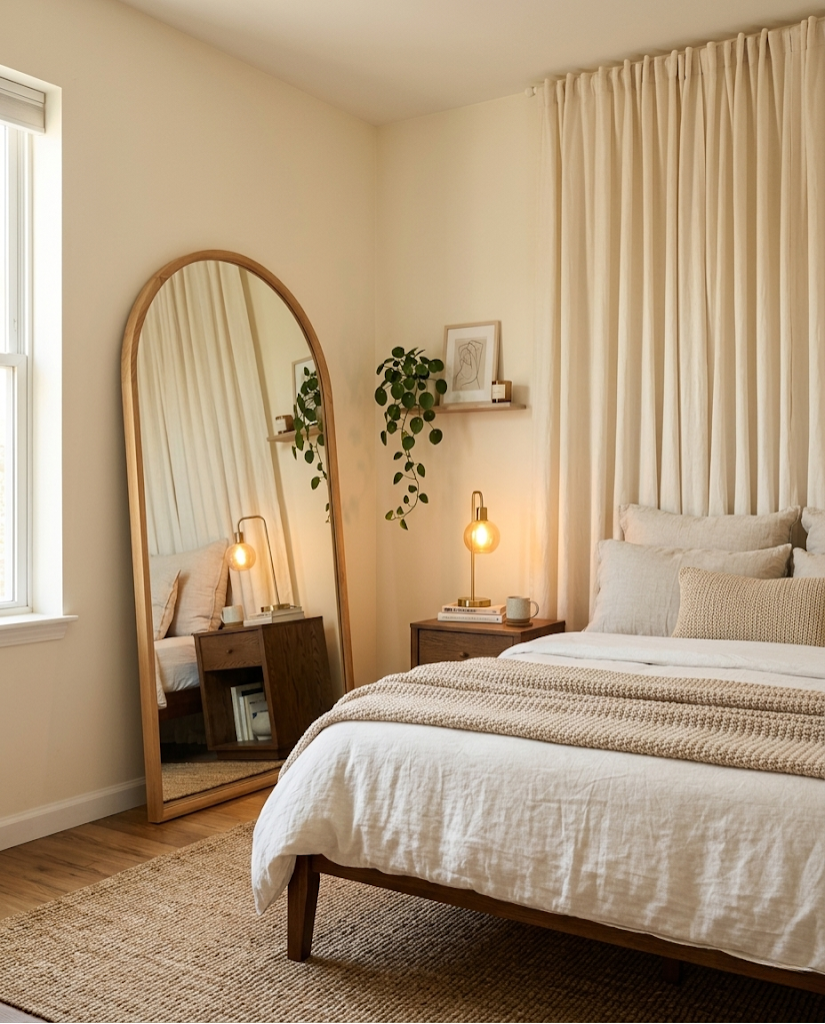
Even if your window starts at 5 feet, hang your curtain rod as close to the ceiling as possible. Floor-to-ceiling curtains make ceilings feel dramatically higher and add a sense of grandeur that completely belies the room’s actual dimensions. This is one of the most impactful free upgrades available.
8. Choose Furniture With Legs, Not Skirts
Furniture that sits on visible legs — rather than floor-length upholstery — creates visual breathing room. The continuous view of the floor under the furniture tricks the eye into perceiving more uninterrupted floor space, which the brain reads as a larger room.
9. Use One Large Mirror
A full-length leaning mirror on the wall opposite the window doubles the apparent depth of the room and bounces natural light to the darkest corners. This is the single most effective cheap upgrade for a small bedroom. One large mirror is infinitely more effective than several small ones.
Storage and Organization
10. Use Vertical Space Aggressively
Small bedrooms often have lots of unused vertical space above eye level. Install shelving all the way to the ceiling for books, decor, and folded items. The higher the shelving goes, the taller the room appears to be — a double win for both storage and visual space.
11. Maximize Under-Bed Space
The area under your bed is some of the most valuable real estate in a small bedroom. Vacuum storage bags for seasonal clothes, shallow rolling drawers for everyday items, and purpose-built under-bed boxes all make this dead zone functional without adding any visible clutter.
12. Add a Pegboard or Wall Grid
A pegboard or metal grid panel on one wall turns vertical surface area into functional storage for accessories, bags, jewelry, and small items — without occupying any floor space. Styled well, it can also serve as a decorative focal point that adds personality to the room.
Cozy Decor Upgrades
13. Layer Your Bedding
The bedroom is the one place where “more is more” genuinely works. Layer a fitted sheet, a flat sheet, a duvet, a throw blanket, and multiple pillows. The visual richness of layered bedding makes even the most spartan small room feel luxurious and hotel-like. Stick to a cohesive color palette — variations in texture within the same tonal family always work best.
14. Use a Statement Headboard
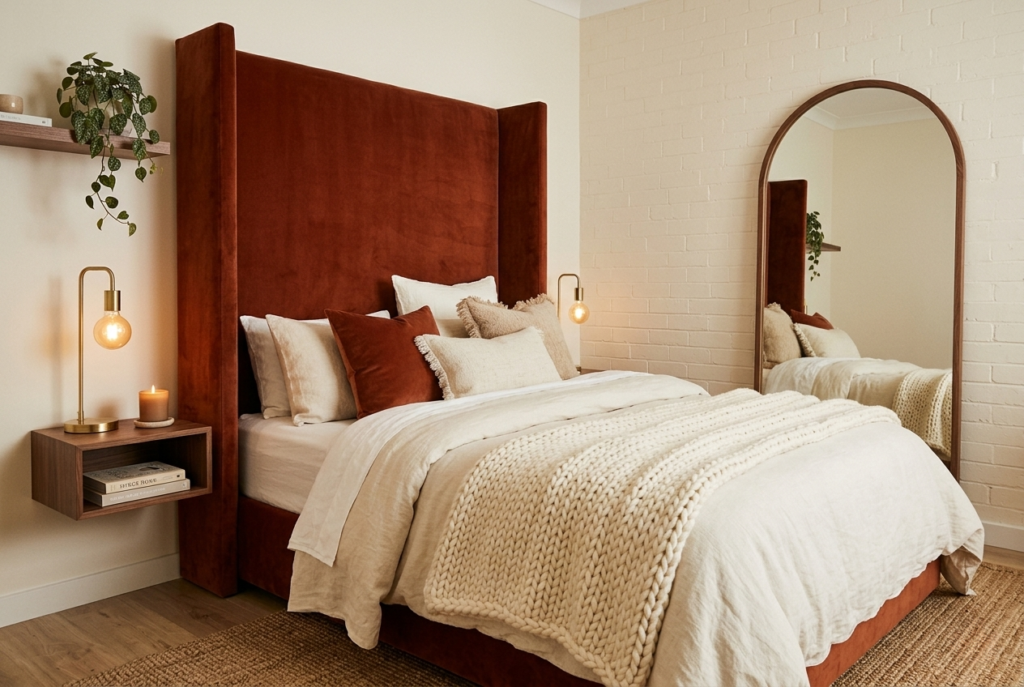
A large, upholstered headboard — especially one that extends close to the ceiling — instantly makes a bedroom feel more intentional and luxurious. It anchors the bed as a focal point and draws the eye upward, making the ceiling feel higher. In small rooms, a tall headboard often works better than a wide one.
15. Choose a Warm, Dark Accent Color for One Wall
The counterintuitive secret of small room design: dark walls can make a small room feel cozier and more enveloping, not more claustrophobic. A deep forest green, navy, or moody terracotta on the headboard wall creates a sense of drama and intentionality that makes small spaces feel boutique rather than cramped.
16. Add Warm Lighting at Multiple Heights
Replace any overhead-only lighting scheme with a combination of bedside lamps, a corner floor lamp, and perhaps under-shelf LED strips. Multiple small light sources at different heights create warmth, depth, and a sense of layers that makes small rooms feel rich and full.
👉 For more lighting tips, check out our full guide: How to Make a Room Look Cozy
17. Add a Plant for Life and Scale
A tall plant in the corner — even a high-quality faux one — draws the eye upward and adds a sense of organic scale that makes small rooms feel more alive and spacious. A single large plant has significantly more visual impact than several small ones scattered around the room.
Clever Final Touches
18. Use a Rug to Anchor the Space
In a small bedroom, a rug should be large enough to extend at least 18 inches beyond each side of the bed. This grounds the room and creates the visual impression of a larger floor area. A rug that’s too small will make the room feel more fragmented — and paradoxically, smaller.
19. Keep the Floor as Clear as Possible
The amount of visible floor space directly correlates with how large a room feels. Every item on the floor reduces perceived space. Use wall hooks, under-bed storage, and over-door organizers to eliminate floor clutter entirely. The goal is to see as much continuous floor as possible when you stand in the doorway.
20. Add a Scent Element
The coziest bedrooms engage all the senses. A bedside diffuser with lavender or cedarwood transforms a functional sleep space into a genuine sanctuary. These micro-investments cost almost nothing but dramatically improve the experience of being in the room — and they signal to your brain that it’s time to relax.
The Key Takeaway
Small bedrooms become cozy bedrooms when you work with the space rather than against it. Use vertical space, remove visual clutter from the floor, add warmth through lighting and texture, and trust that a few deeply intentional choices will always outperform a room stuffed with too much furniture.
The goal isn’t a bigger bedroom — it’s a bedroom that feels like a sanctuary, regardless of its size.
👉 Looking for more inspiration? Read our guide on Living Room Color Ideas: The 12 Best Palettes of 2025
Love this look?
Save these ideas to your Pinterest board and come back when you are ready to shop.

