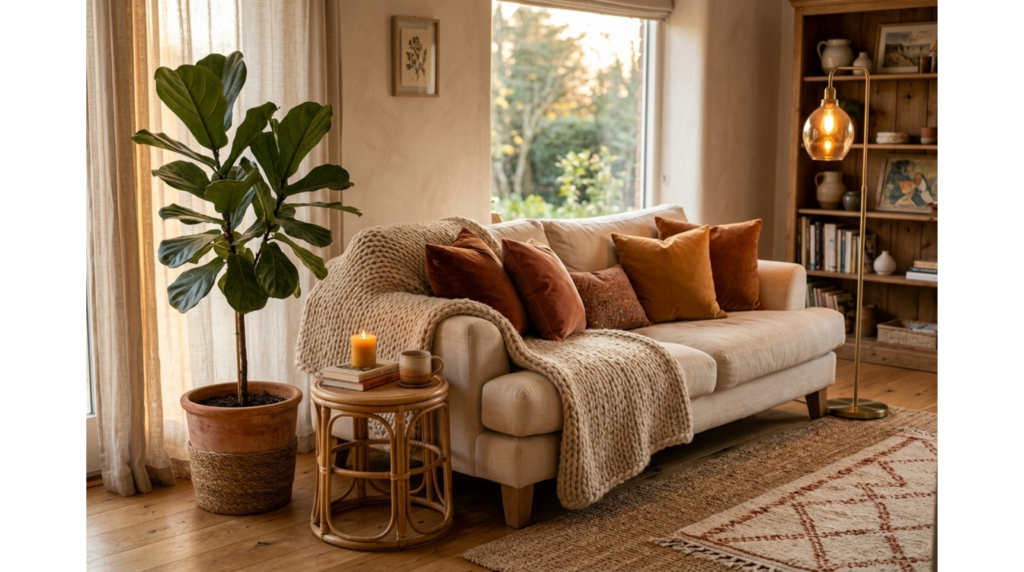
There’s a feeling we all know — walking into a room and instantly wanting to exhale, curl up, and never leave. That feeling isn’t accidental. It’s the result of intentional design choices that trick your brain into feeling safe, warm, and at home. The good news? You don’t need a designer’s budget to get there.
In this guide, you’ll learn exactly how to make a room look cozy using 15 proven techniques — whether you’re starting from scratch, refreshing a rental apartment, or just trying to shake that “hotel lobby” feeling from your space.
1. Layer Your Lighting (This Is the #1 Mistake People Make)
Overhead lighting is the enemy of cozy. A single ceiling light creates harsh, flat shadows that make a room feel like an interrogation room. The secret designers use is called layered lighting — a combination of three light sources at different heights:
- Ambient light: a soft overhead source (ideally on a dimmer)
- Task light: a floor lamp or table lamp for specific areas
- Accent light: candles, fairy lights, or LED strip lighting for warmth
The goal is to create multiple warm pools of light rather than one bright, flat wash. This single change can make a room feel 10 degrees warmer — figuratively and literally.
2. Use Warm Color Temperatures in Your Bulbs
Before you buy a single throw pillow, check your light bulbs. Bulbs are measured in Kelvin (K). Cool white bulbs (5000–6500K) make spaces feel clinical and cold. For cozy rooms, always use bulbs rated between 2700K and 3000K — these emit the warm amber glow of candlelight, which is the most universally soothing light to the human eye.
3. Add a Rug — Even If You Have Carpet
Rugs define space and anchor furniture. In an open floor plan, a large area rug “creates” a room within a room, making the seating area feel intimate and contained. On hard floors, a rug adds warmth underfoot — literally. The general rule: your rug should be large enough that at least the front two legs of every sofa and chair sit on it.
Pro tip: Layer a smaller, textured rug on top of a larger neutral one for a high-end, bohemian look.
4. Pile on the Throw Pillows and Blankets
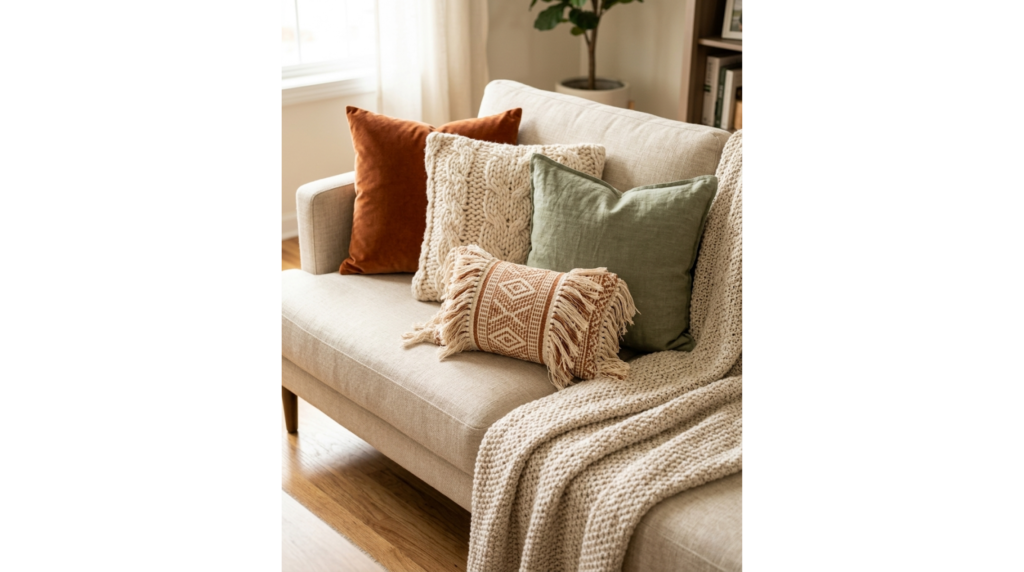
This is the easiest cozy upgrade. Texture is the key word here — don’t buy five identical pillows. Mix chunky knit with velvet with linen for depth. As a starting point for a sofa: two large pillows (24″x24″), two medium (18″x18″), and one lumbar pillow. For blankets, drape one over the arm of the sofa and fold another in a basket nearby. The goal is “lived in,” not “staged.”
5. Choose the Right Color Palette
Color has a profound psychological effect on how cozy a room feels. For maximum warmth, decorate with colors that mimic nature’s autumnal palette:
- Warm neutrals: cream, oatmeal, warm white (not cool white or stark gray)
- Earth tones: terracotta, rust, burnt orange, mustard yellow
- Deep accents: forest green, navy, chocolate brown, burgundy
These colors absorb light rather than reflecting it, making the room feel enveloped and intimate.
6. Hang Curtains High and Wide
The single greatest optical illusion in interior design: hang curtains as close to the ceiling as possible and extend the rod 6–12 inches beyond the window frame on each side. This makes windows look massive, makes ceilings look higher, and — crucially — makes rooms feel more enveloping and cocooned. Use heavy, lined curtains in a warm fabric like velvet or linen for extra warmth.
7. Bring In Plants (Real or Faux)
Greenery adds life, oxygen, and visual softness to any room. Plants break up hard angles and introduce organic, irregular shapes that the eye finds calming. If you don’t have a green thumb, high-quality faux plants are entirely acceptable — just avoid cheap plastic options. A large faux fiddle leaf fig or monstera in a corner can transform a room’s energy entirely.
8. Embrace Wood and Natural Materials
Cold, sterile rooms share one quality: they’re full of synthetic, hard-surfaced materials. Cozy rooms use natural materials that absorb light and have tactile warmth:
- Wood: a reclaimed wood coffee table, wooden frames, a chunky wooden bowl
- Rattan and wicker: a rattan mirror, wicker basket storage
- Stone: a marble tray, stone coasters
- Linen and cotton: pillowcases, tablecloths, curtain panels
The more natural elements in a room, the more grounded and warm it will feel.
9. Create a Reading Nook or Corner
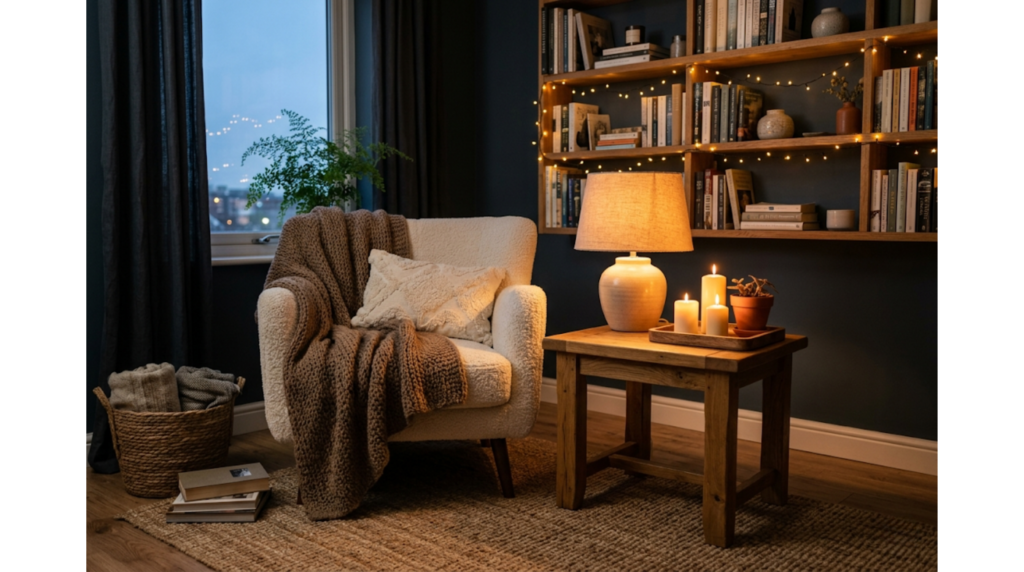
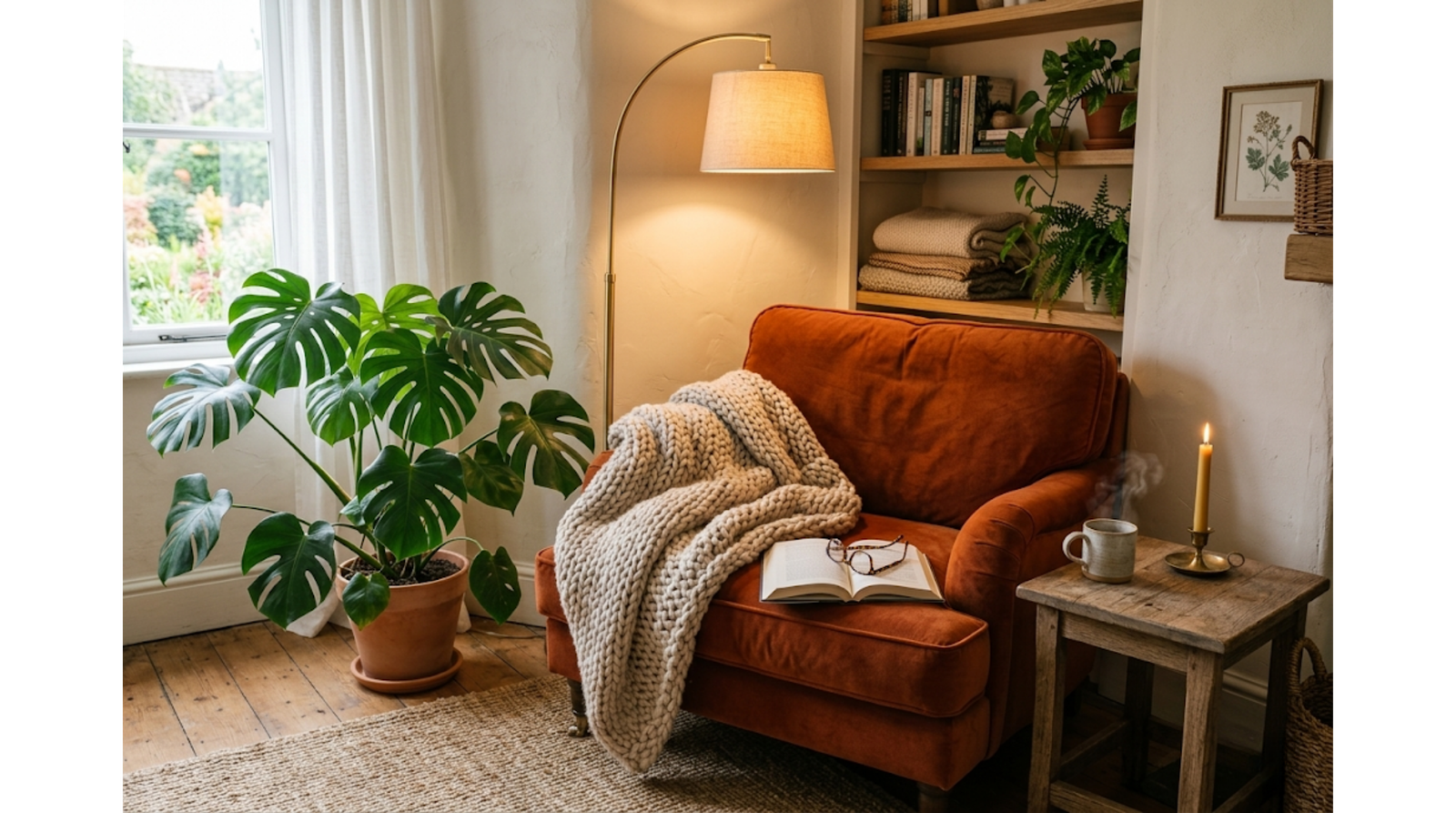
Cozy rooms have a focal point — a spot that invites you to linger. Even a small corner transformed with an armchair, a floor lamp, a small side table, and a blanket becomes a destination within the room. This gives the space a sense of purpose beyond just “passing through.”
10. Use Scent as Your Secret Weapon
Coziness isn’t just visual — it’s multisensory. Studies show that specific scents trigger feelings of warmth, comfort, and nostalgia. The most universally cozy scents include cedarwood, vanilla, sandalwood, cinnamon, and pine. Use candles, wax melts, or a diffuser consistently so your room has a signature scent. The moment you light a specific candle, your brain will associate it with “home.”
11. Declutter — But Don’t Minimalize
There’s a crucial difference between minimalism and coziness. Minimalism removes everything; coziness removes chaos but keeps warmth. Before adding anything, remove anything that creates visual noise: cords, random objects without a home, furniture that’s too large for the space. Then curate what remains — only display objects that bring joy or serve a purpose.
12. Add Mirrors Strategically
Mirrors reflect light and create the illusion of depth, making smaller rooms feel more expansive and warmer. A large arch mirror leaning against the wall is one of the biggest home decor trends right now — and for good reason. It adds character, reflects your cozy lighting, and fills vertical space without weighing down the room.
13. Style Your Bookshelf Like a Designer
A well-styled bookshelf is one of the most cost-effective ways to add personality and coziness to a room. The formula: alternate horizontal and vertical stacks of books, add one or two small plants, include objects of varying heights (a candle, a small sculpture, a framed photo), and leave some breathing room — don’t pack it floor to ceiling.
14. Use Wallpaper or an Accent Wall
A single patterned or textured wall creates a focal point that instantly makes a room feel more designed and intentional. Peel-and-stick options make this completely renter-friendly. A warm-toned botanical print or a textured grasscloth wallpaper on just one wall can transform the entire energy of a room without needing to redecorate everything else.
👉 Looking for wallpaper inspiration? Check out our guide: Trending Wallpaper Ideas to Transform Your Home
15. Lower the Furniture
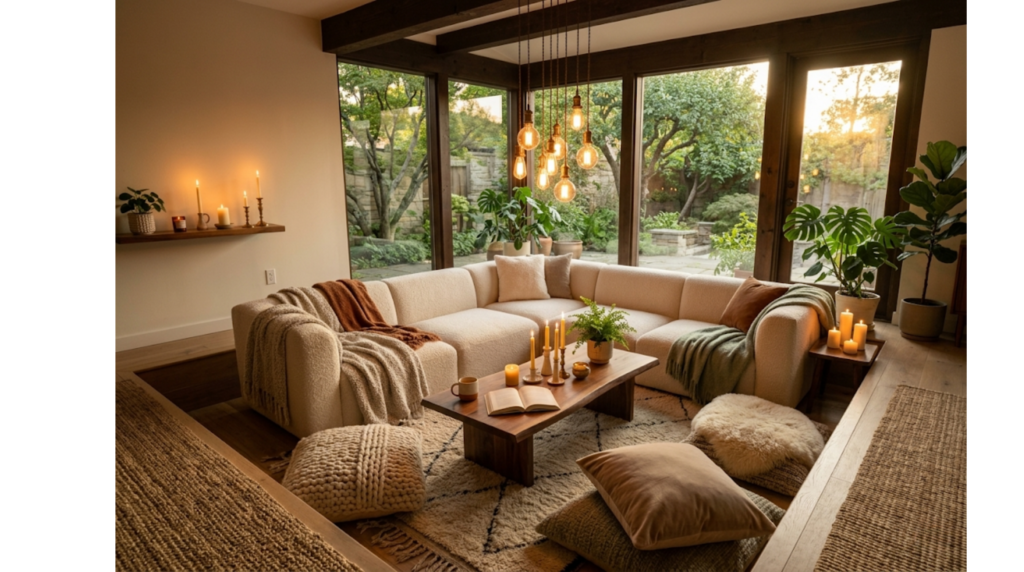
High furniture creates a formal, upright atmosphere. Low furniture — a low sofa, a coffee table close to the ground, floor cushions — creates the visual impression of relaxation. If you can’t replace furniture, try adding floor cushions or poufs to encourage sitting lower and create that “sunken living room” feel that is the pinnacle of cozy design.
The Bottom Line
Creating a cozy room isn’t about spending a lot of money — it’s about making intentional choices that appeal to the senses. Start with lighting, add texture, and work from the ground up. The key question to ask yourself as you style each corner: “Would I want to stay in this spot for an hour?” If the answer is yes, you’re doing it right.
Save this post and share it for more home inspiration! Follow us on Pinterest @MyCozyNestFinds for more affordable home ideas.

